When you’re planning a wedding, the question always comes up at some point: “What if it rains?”
It’s a legitimate question, but one that’s often phrased in the wrong way: as if rain were a fault to be fixed, rather than a variable to be managed.
It is not the plan itself that makes the difference, but the approach. Not a last-minute, improvised ‘Plan B’, but a second version that is already in place: the same identity, the same details, the same elegance. The setting changes, but the quality remains the same.
When everything is planned with this approach in mind, the unexpected doesn’t disrupt the day: it enhances it. And what seemed like a risk turns into an unexpected bonus: a more intimate atmosphere, brighter lighting, moments of greater closeness. In other words: you don’t ‘save’ the wedding. You simply tell its story in a different way.
Contents
- Second version, same identity: why it works
- Outdoor set: gardens and gazebos as the main backdrop
- Interior layout: spacious rooms, lobby and reception area
- A smooth transition: what happens when the weather changes
- Versatile displays: how to avoid the ‘fallback’ effect
- Comfort and ambience: light, music, relaxation
- Photographs in the rain: when the weather becomes an aesthetic
- Practical tip: take a look around indoors during the site visit
- Contact details and quote
Second version, same identity: why it works
If indoor spaces are conceived as a genuine choice rather than a stopgap solution, the weather ceases to be a source of anxiety and simply becomes a change of scenery. The point is not simply ‘to have shelter’, but to have a complete alternative – one that has already been imagined, is already beautiful, and is already yours.
That is why it is useful to plan the interior layout as if it were the first option, especially when the season or the weather forecast makes everything more uncertain. It means deciding in advance where the key moments will take place, how guests will be seated, where the lighting and decorations will be focused, which areas will become the ‘centre stage’ and which will remain functional spaces.
When this second version is devised with the same care, something simple happens: it doesn’t feel like a stopgap. It feels like a choice. And at that point, the weather no longer determines whether the day is a success: it merely sets the tone.
Outdoor setting: gardens and gazebos as the main backdrop
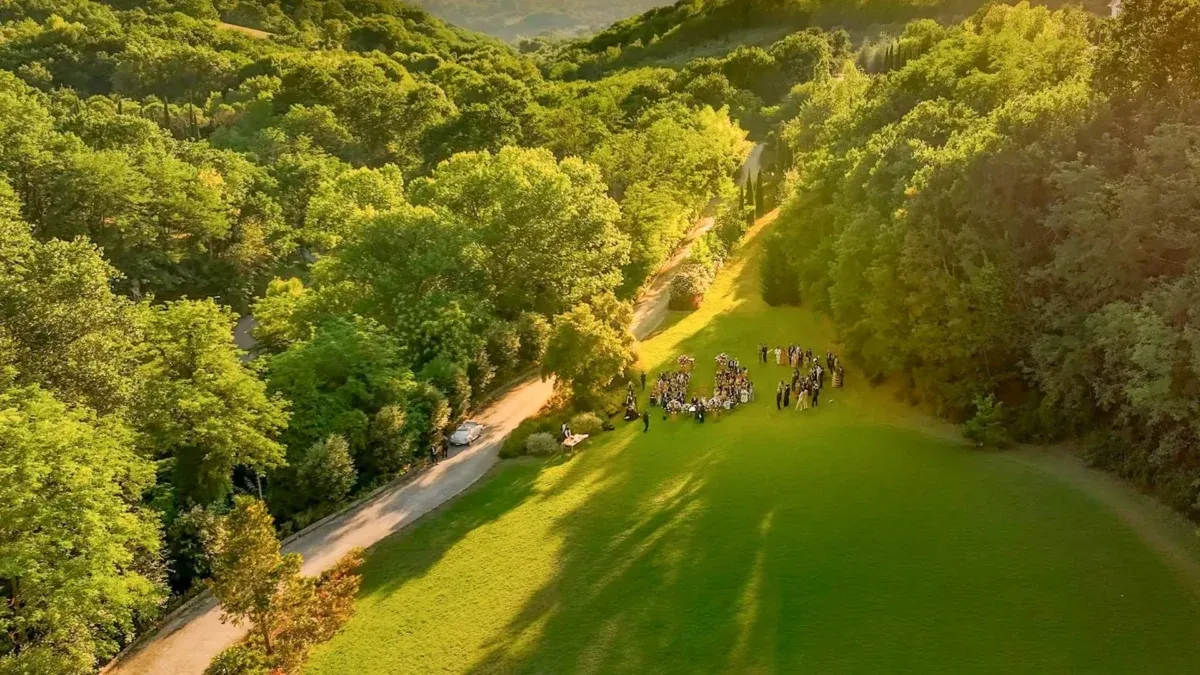
When the weather permits, the outdoor setting remains a truly memorable experience: the centuries-old park and the English-style garden provide a backdrop that enhances the ceremony and makes every choice feel natural, from the arrangement of the seating to the timing of the processions. Here, the civil ceremony isn’t simply ‘held outdoors’: it is staged with simplicity, without the need for any unnecessary embellishment.
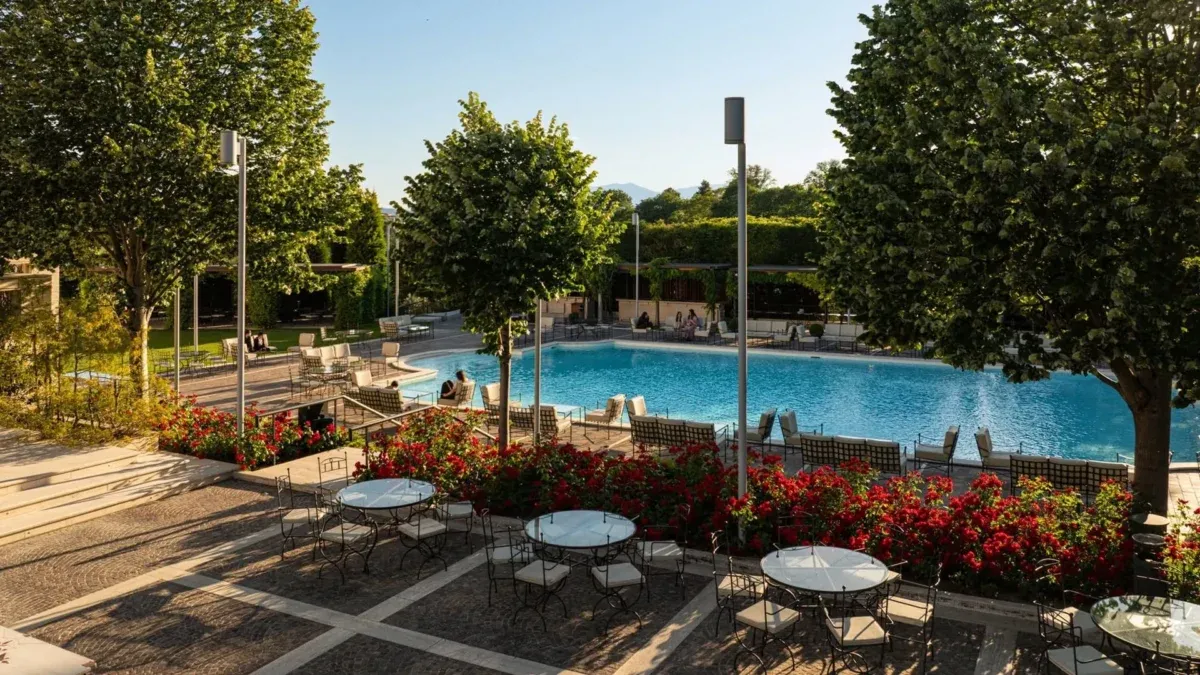
These same spaces also work well for an outdoor reception, because quality lies not only in the greenery, but in the sense of continuity: ritual, toasts, conviviality. And when the day begins outdoors, the outdoor gazebos become a key feature: they are practical, they provide shelter, but above all they create a clean, tidy and photogenic setting.
In this way, the exterior is not merely ‘the best part of the day’: it is a well-constructed scene that holds up both the afternoon light and the transitions between moments, without any loss of focus or improvisation.
Interior layout: spacious rooms, lobby and reception area
The second version must be complete, not ‘streamlined’. It must not take anything away, but transform. If the setting changes, the experience must remain the same: the same pace, the same comfort, the same elegance.
This is why spacious and welcoming indoor spaces are needed – spaces capable of seamlessly accommodating a reception that may have begun outdoors, amongst gardens and gazebos. There is just one aim: to ensure that the move is not perceived as a disruption, but as a natural progression of the day.
And there’s one advantage that you often only realise when it rains: inside, the atmosphere becomes more intimate and cosy. Even a spacious lobby, if well managed, can accommodate different moments: a toast, a few words, a break, a quiet corner for conversation. The rain stays outside, but inside there’s a sense of closeness that is sometimes the most memorable part of the party.
A smooth transition: what happens when the weather changes
This is where the real difference lies between a ‘Plan B’ and a ‘second version’: the way the transition is handled.
It’s not enough just to have a space available. You need a seamless, almost imperceptible change of scene that doesn’t bring the day’s energy to a sudden halt.
When rain is on the way, there is one priority: to make a decision straight away and coordinate everyone’s movements without any gaps. The bride and groom must be clearly informed, and everything else must run smoothly: tables, floral decorations and service are quickly rearranged, following a precise plan, so that guests do not feel as though they are waiting or losing track of what is happening.
The point is this: the party doesn’t have to ‘start again’ from scratch. It must carry on.
In other words: the day doesn’t come to a halt. The scene changes. And if the transition is well directed, nobody sees it as a problem: they see it as part of the story.
Versatile displays: how to avoid the ‘fallback’ effect
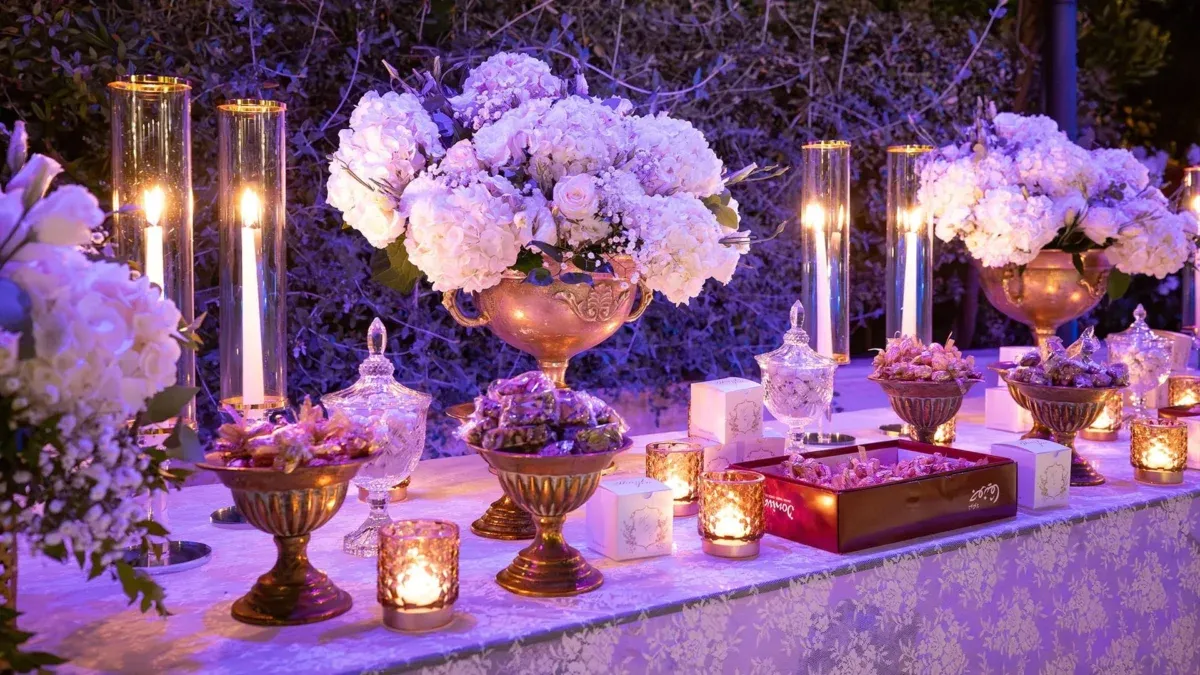
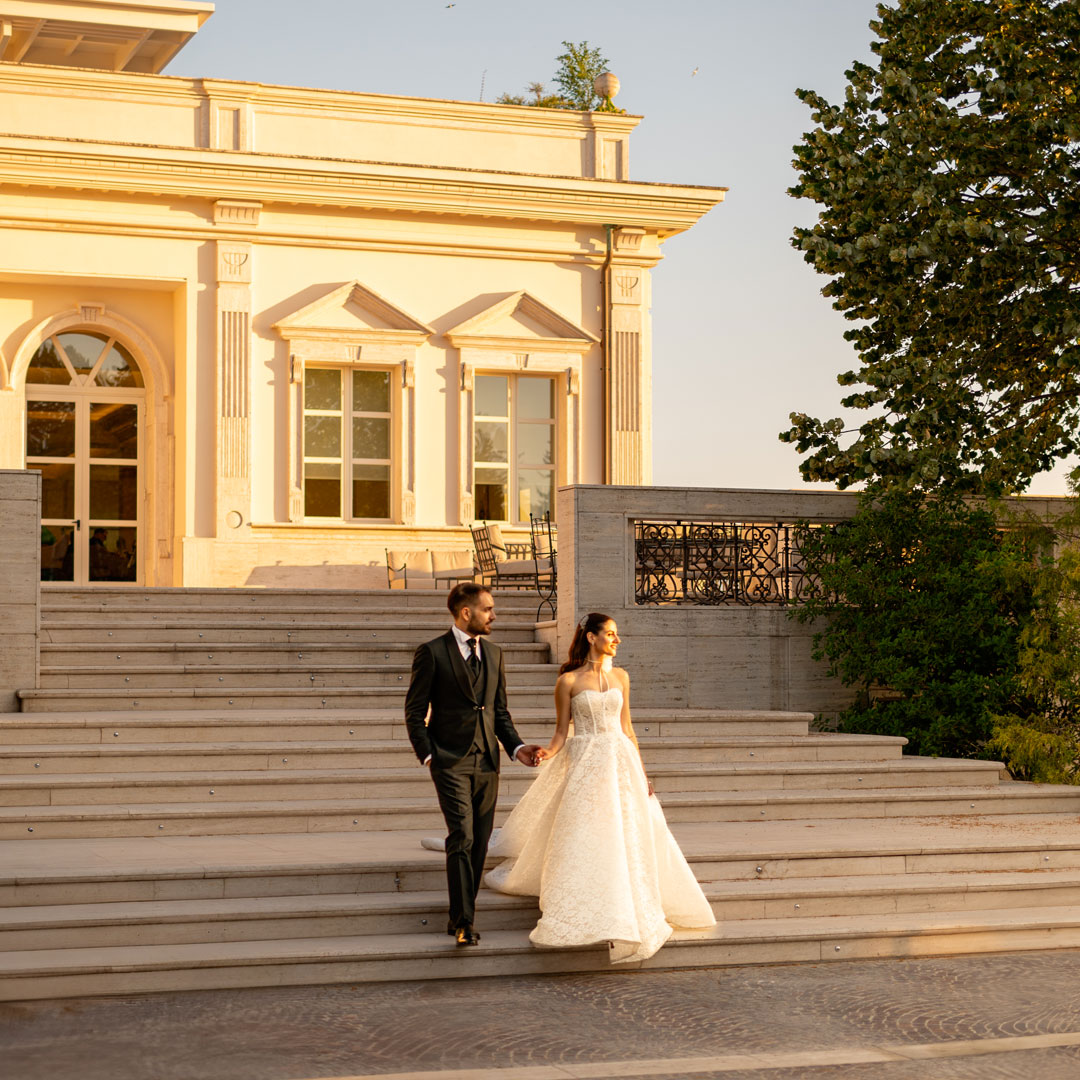
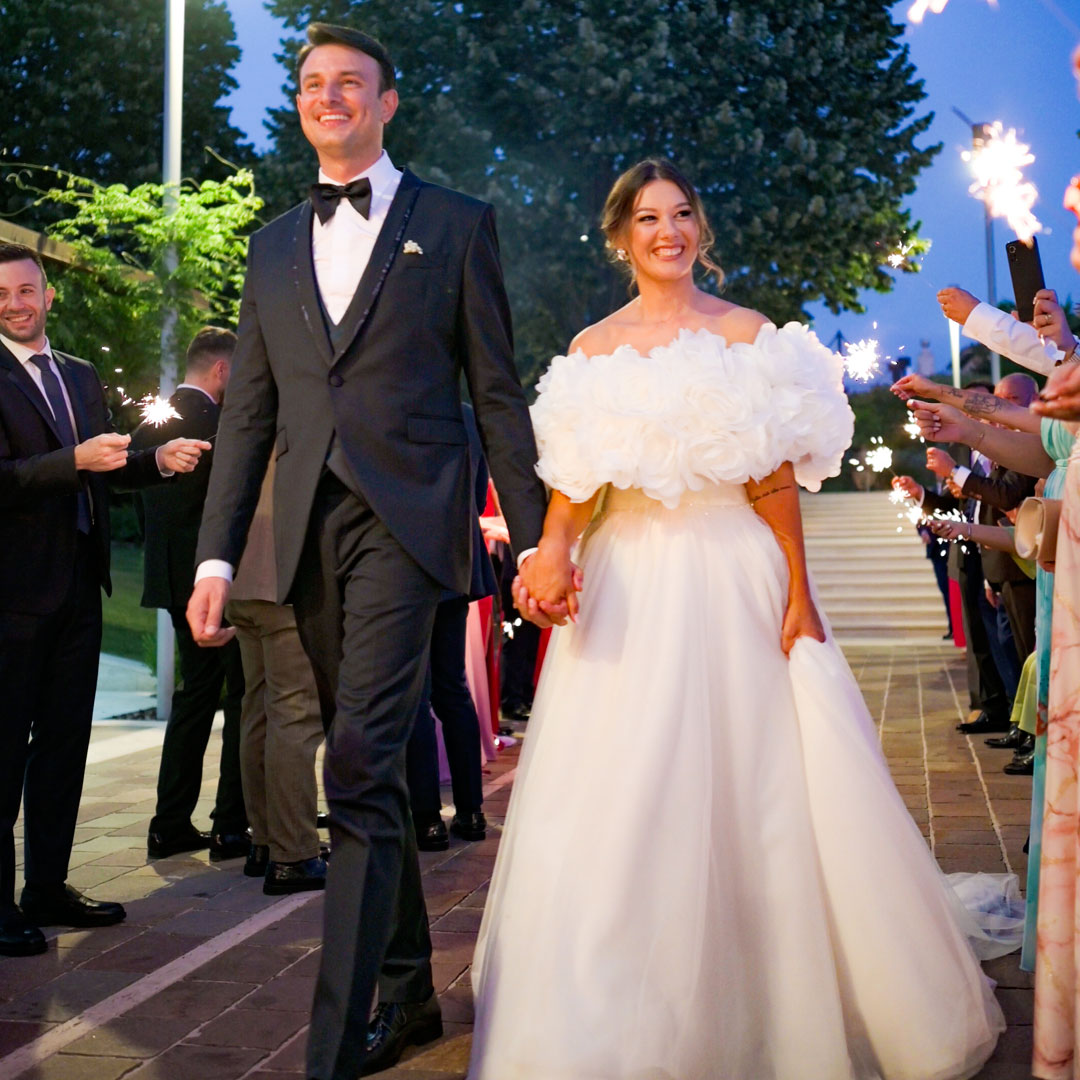
To maintain visual consistency, the rule is simple: choose versatile decorations that can transition elegantly from the exterior to the interior spaces. There’s no need for a separate ‘re-decoration’ scheme: what’s needed is a scheme designed to be adaptable.
This means prioritising modular and clean-lined elements: arrangements that can be moved without losing their shape, stable centrepieces, and details that work equally well in natural light and under warmer lighting. The colour palette helps too: a few well-chosen colours cope better with a change of setting than solutions that are too fragile or too closely tied to a single background.
When an installation is designed to be ‘mobile’ from the outset, something important happens: it never feels like a stopgap solution. The quality remains the same in both versions, because you’re not chasing the weather – you’re following a plan.
Comfort and ambience: light, music, relaxation
A second option works as long as it does not detract from the guests’ experience. Rain may alter the setting, but it must not detract from the enjoyment: comfort, pace and the quality of the moments must remain intact.
That’s why specific details matter – the ones you notice straight away: acoustics that ensure live music and speeches come across clearly, spaces designed so you can linger without feeling ‘in the way’, with armchairs and small sitting areas that invite you to relax and chat. And then there are two crucial elements, especially when everything changes outside: air-conditioned rooms and striking lighting, capable of enhancing the atmosphere and making the party feel complete, not ‘displaced’.
If these details are taken care of, the second option isn’t a compromise: it’s simply another way of experiencing the same day. And the guests won’t give the rain a second thought. They’ll be thinking about how comfortable they are, and how lovely it is to stay.
Photographs in the rain: when the weather becomes an aesthetic
Rain can also become a visual ally. Instead of avoiding it at all costs, you can choose to make use of it: just a few well-thought-out shots are enough to transform the unexpected into something aesthetically pleasing. After a storm, there are often rainbows, skies thick with clouds, reflections on the ground, and a more dramatic, deeper light. And, on certain evenings, even flashes of lightning can provide a powerful, almost cinematic backdrop.
It’s all about balance: you don’t necessarily have to ‘take photos underwater’. All you need is a little staging: two minutes, an elegant umbrella, a sheltered spot, a simple gesture. The atmosphere does the rest.
If the director is prepared, these images aren’t captured ‘in spite of’ the weather, but thanks to it. And they often become the ones people remember most, precisely because they don’t seem staged: they look real.
Practical tip: take a look around indoors during the site visit
The key is to decide in advance, not at the last minute. The rain isn’t the problem – improvisation is.For this reason, during the site visit, it is a good idea to create a proper indoor preview: decide where the ceremony, pre-dinner drinks, dinner and cake-cutting will take place if the event moves indoors; work out the routes, lighting points, table layout, ‘stage’ areas and service areas.Once this second version has been drawn up in detail, the wedding day changes everything and yet nothing at all: a clear plan is put into action, with no arguments and no last-minute rushes. The result: less stress for the bride and groom, a smoother experience for the guests, and the crucial sense that everything has been taken care of, whatever the weather.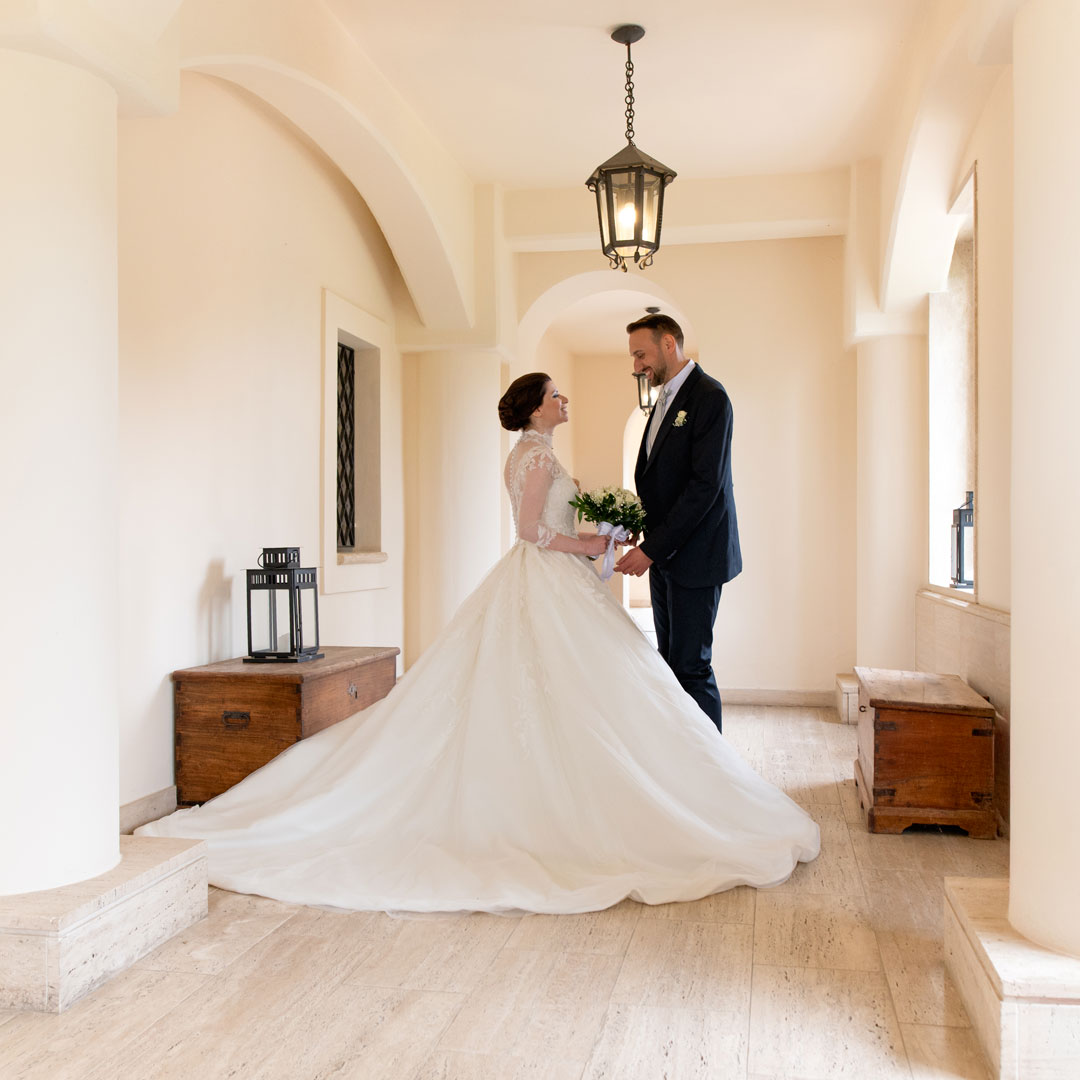
Contact details and quote
If you are considering holding your wedding at Villa Orsini, the best way to proceed is to arrange a viewing and request a quote: you can use the contact form on the website or get in touch using the venue’s contact details. The team at Villa Orsini will be delighted to help you plan your wedding.